Products
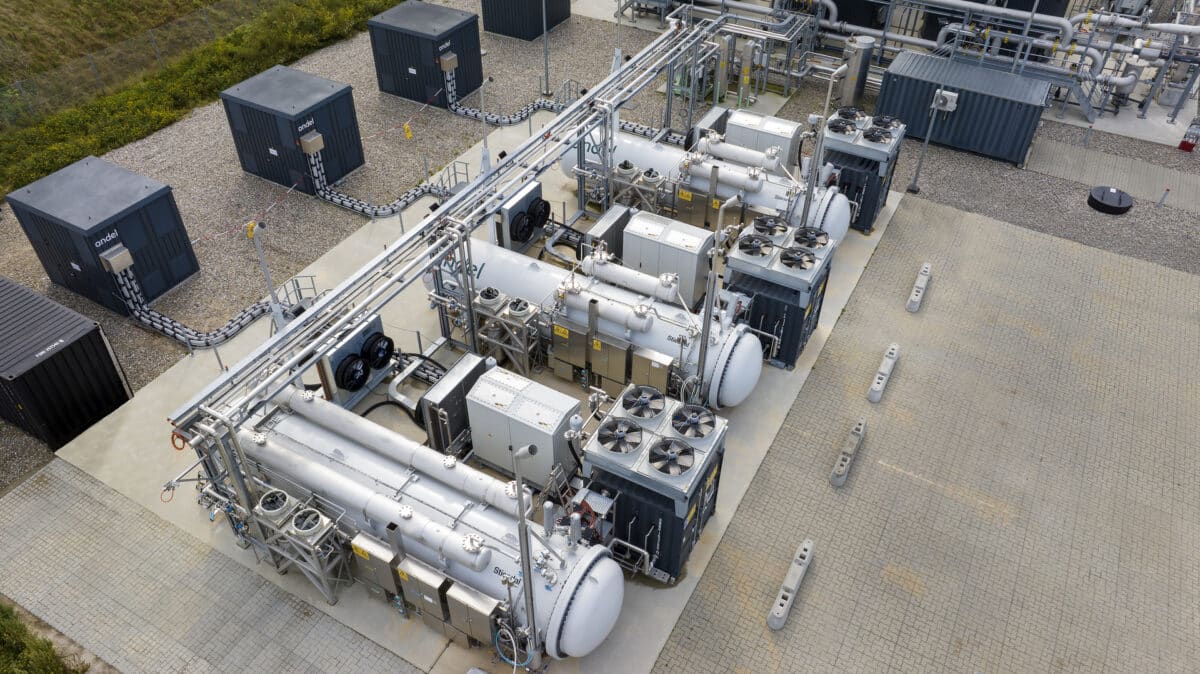
The HydroGen technology represents a European-made, fully industrialised approach in which the system, installation process, and Balance of Plant are designed for efficient, standardised delivery.
Scale hydrogen plants to fit your project and site
The industrialised standard of the HydroGen Electrolyser marks a shift away from custom-built chemical plants. Serving as a fundamental building block, the unit is self-contained and ready for outdoor installation.
With no buildings required and simplified transportation, developers can right-size capacity immediately and scale effortlessly as demand grows.
Explore the 3.1 MW and 6.5 MW HydroGen Electrolysers and the green hydrogen plant concept that scales and adapts to your project size and requirements.
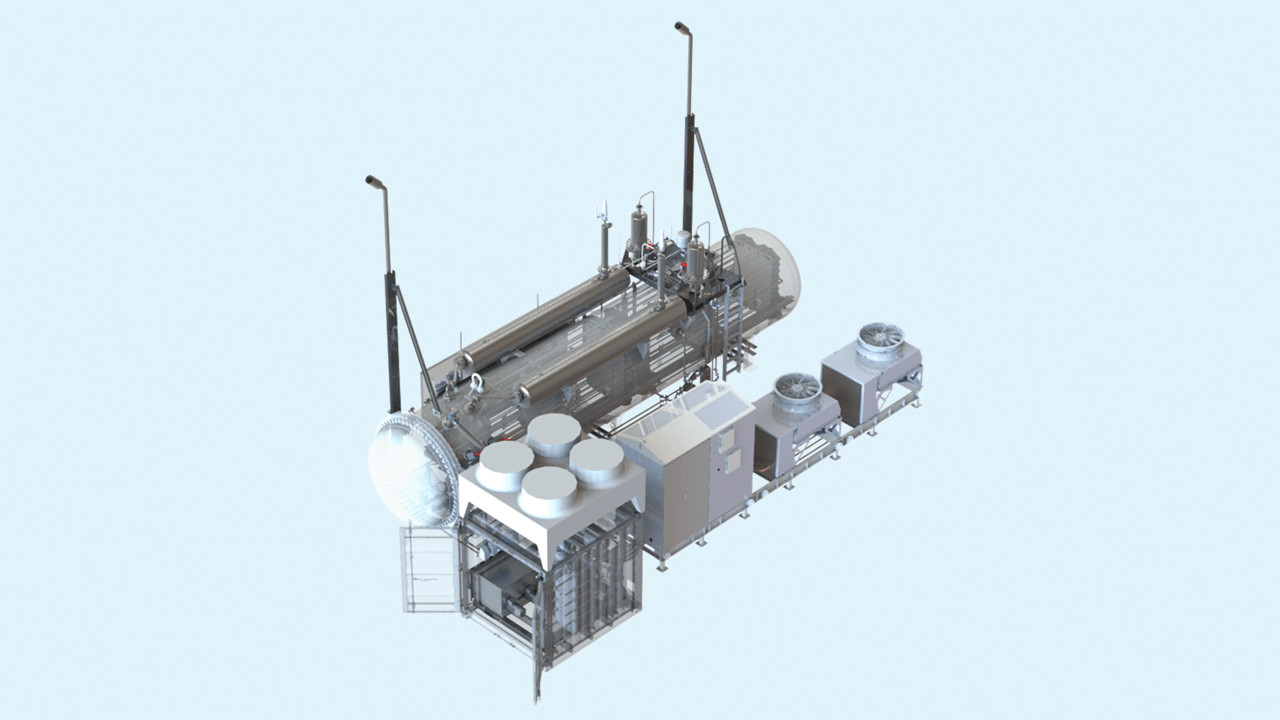
The 3.1 MW HydroGen Electrolyser
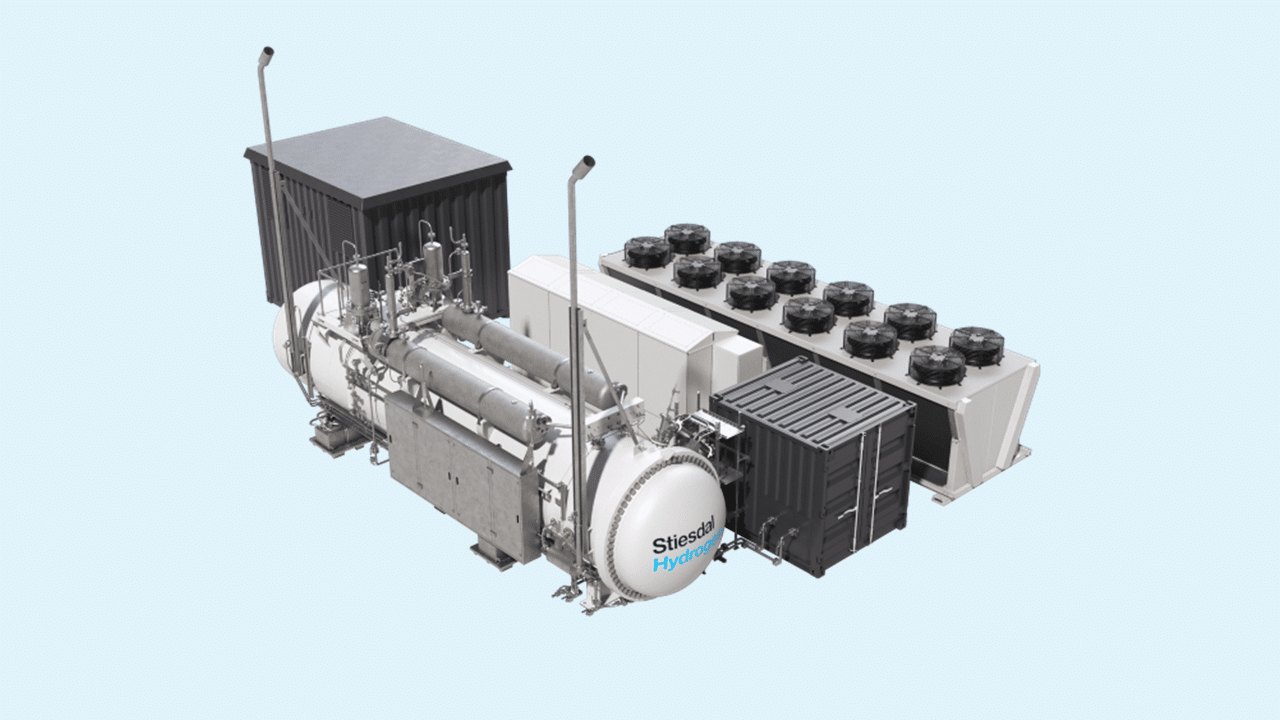
The 6.5 MW HydroGen Electrolyser
Designed for the next-generation green hydrogen plant
The HydroGen Electrolyser is a standardised unit for pressurised hydrogen production at low cost.
The HydroGen technology represents a fully industrialised system approach in which not only the stack itself but also the installation process and Balance of Plant are designed for efficient, standardised delivery.

Low green H₂ LCOH
High system efficiency
Zero degradation
Dynamic operation
Captures low-cost power

High pressure and purity
Serves downstream process
Avoids additional compression and loss
Enables dynamic operations

Outdoor application
Avoids buildings and HVAC
Simplifies commissioning
Minimises ATEX
Reduces CAPEX

Rapid and modular delivery
Prefabrication
Simple and minimal work on site
Budget discipline
Reduces time to revenue

Standardised supply chain
EU-based and industrial manufacturers
Designed for mass production
Quality assurance
Ready for GW scale-up

Low system CAPEX
Modularising and standardising
Simple delivery and installation
Reduced Balance of Plant requirements
No process buildings or HVAC
Four modules.
Prefabricated and industrialised.
The HydroGen Electrolyser is designed for rapid installation.
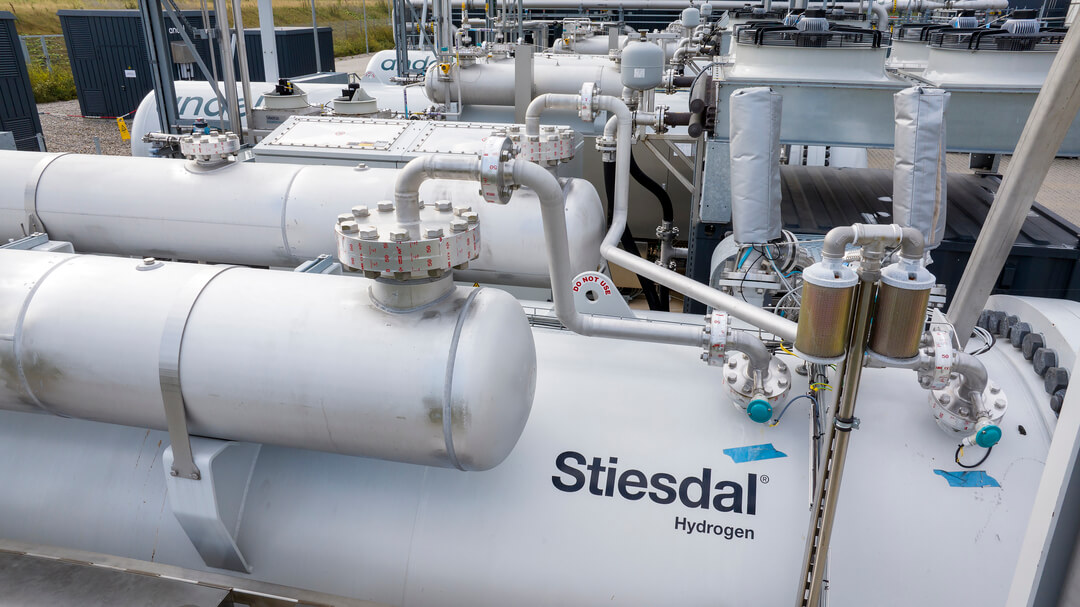
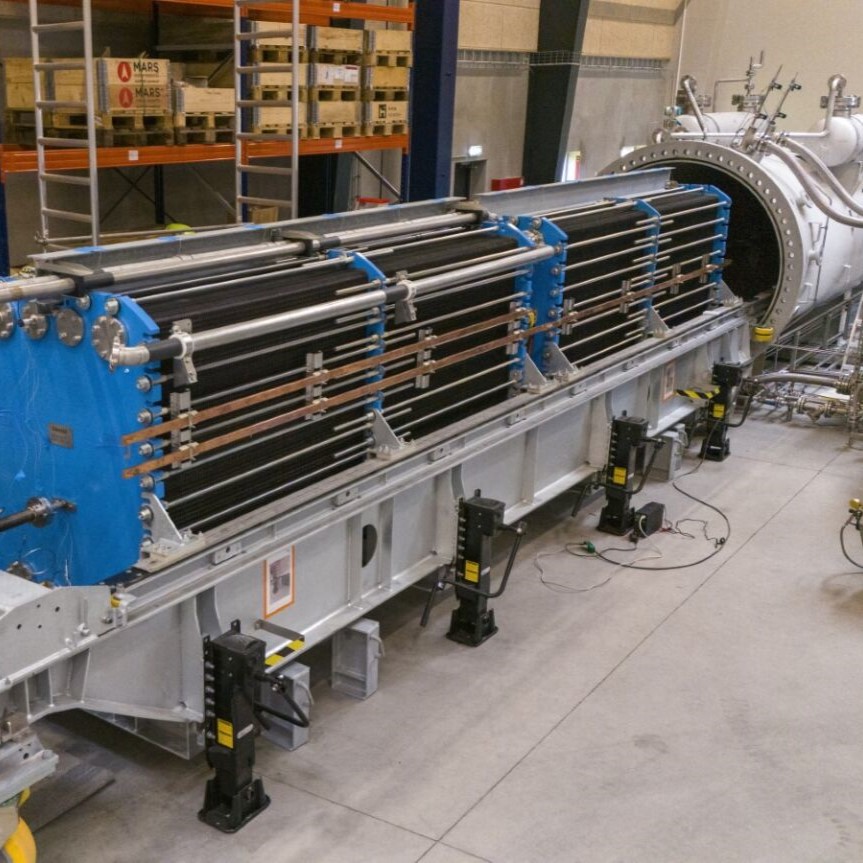
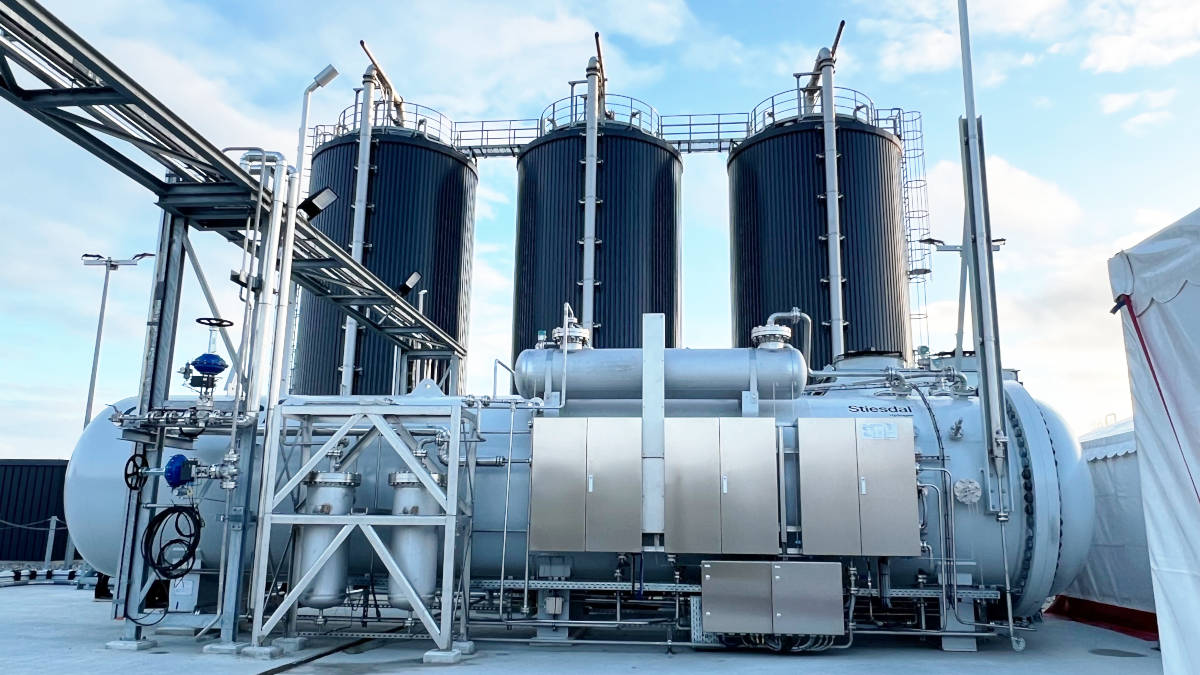
Each HydroGen unit consists of four modules: an electrolyser stack, which is housed within a pressurised vessel, a power module, and an auxiliary system.
All modules use existing, mass-produced components from global Tier-1 partners, ensuring low cost, rapid scale-up, and supply chain security.
The entire electrolyser system is delivered on two trucks. Once on site, installation consists primarily of mounting the modules on pre-installed point foundations, followed by mechanical and electrical completion at clearly defined interfaces.
The Balance of Plant is minimised, with no requirement for buildings or large support systems.
Supplied by European Tier-1 partners

Drawing on Danfoss’s expertise in customised plates and welding, the electrolysis cell stack can be scaled and mass-produced. The heat exchanger design, a core competence of Danfoss, integrates clearly into Stiesdal’s energy-efficient and low-cost electrolyser.
KK Group delivers the power supply units and builds the electrolyser control system designed by Stiesdal Hydrogen. This stack of hardware ensures stable, efficient operation under dynamic renewable inputs.

Welcon produces the pressure vessel that houses the electrolysis cell stack, enabling high hydrogen delivery pressure without compression losses. Welcon is the world’s leading manufacturer of tower sections for wind turbines, producing more than 1,350 sections per year.

Nissens Cooling Solutions’ shift from copper to aluminium coolers has made them a leading supplier to power-generation systems. Their offshore-wind experience equips them to meet demanding corrosion-protection requirements.
Why alkaline?
Our HydroGen Electrolyser is based on conventional, proven alkaline electrolysis. The alkaline technology uses electrodes made with abundant elements and does not require the noble-metal catalysts required for other electrolysis technologies such as PEM.
It operates at low temperatures, ensuring a long system lifetime. The relative simplicity of alkaline electrolysis is highly compatible with mass production and the use of standard industrial technologies.
The integrated pressure vessel delivers hydrogen at up to 35 bar without compression losses, cutting downstream CAPEX and OPEX. High-efficiency electrodes with internal cooling ensure uniform temperature and minimal losses.
From 20% to 5% material waste
A round stack design typically leads to substantial material wastage (around 20%) because the plates are cut from large metal sheets. The leftover metal cannot be reused efficiently.
By minimising waste, we cut costs. The rectangular design maximises the use of raw materials, making the electrolyser more economically viable.

Send me your questions
Contact Esben Baltzer Nielsen, Head of Sales and Business Development, if you have unanswered questions or want to discuss your hydrogen project.