Fraunhofer confirms performance of Stiesdal’s electrolyser
Copenhagen, 24 November 2026
Fraunhofer IWES has validated Stiesdal’s specified performance for its 3.1 MW alkaline electrolyser based on commercial operation data for nominal energy consumption, flow rate, high pressure and hydrogen purity.
24 November 2026 – Independent third-party validation by the Fraunhofer IWES has verified the performance figures of Stiesdal’s 3.1 MW alkaline electrolyser.
Electricity is the highest operating cost in hydrogen production. For plants running many hours at high load, every kilowatt-hour per kilogram counts across the lifetime of the plant.
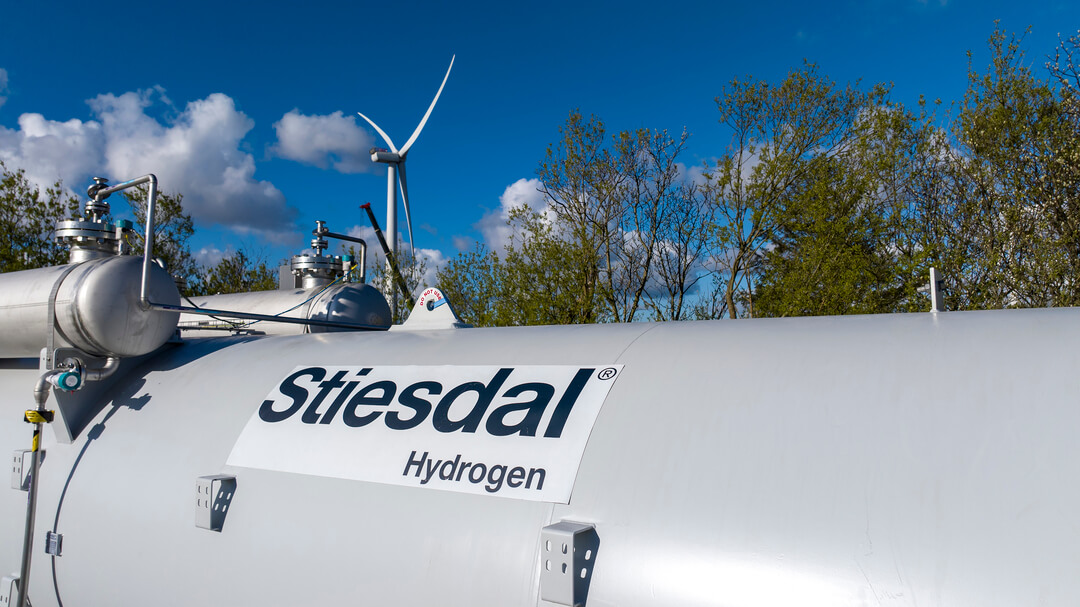
That is why Stiesdal Hydrogen asked Fraunhofer to measure its 3.1 MW alkaline HydroGen Electrolyser, which operates commercially at Måde near Port of Esbjerg, under real operating conditions.
Verified full-load efficiency
Between May and September 2026, IWES carried out the measurements following the JRC harmonised protocol for electrolyser testing.
Above 80% load, the system consumed 53.6 to 53.9 kWh per kilogram of hydrogen (4.82–4.84 kWh/Nm³), corresponding to a system efficiency of 73.1 – 73.4% (HHV), or 61.8–62.1% (LHV), in line with our nominal specifications. While specific energy consumption is higher at part-load below 80%, the system’s fast ramp-up rate (1% power per second) ensures it rapidly reaches the optimal 80–100% operating window where commercial plants generate the vast majority of their hydrogen.
These are all system-level figures. They include AC/DC conversion and all auxiliary systems, and they count only pure hydrogen output. The grid transformer and downstream gas purification are outside the system scope.
Documenting Stiesdal’s industrial readiness
The results are important because they provide transparent and reliable data for hydrogen project developers, EPC contractors, and investors.
“Developers and their technical advisors now have independent, validated data to build their business case on.“
– Anders Vangsgaard Nielsen, Head of Engineering at Stiesdal Hydrogen
“Our customers run this system hard, at high load and for many hours a year,” says Anders Vangsgaard Nielsen, Head of Engineering at Stiesdal Hydrogen. “That is where it has to perform, and that is where Fraunhofer IWES measured it. Developers and their technical advisors now have independent, validated data to build their business case on.”
The Frauenhofer measurement campaign was done on the 3.1 MW electrolyser, which runs on the same platform as Stiesdal’s 6.5 MW electrolyser.
A subsequent measurement campaign, also from Frauenhofer, will cover system dynamic performance in the near future.
About Stiesdal’s 3.1 MW HydroGen Electrolyser
- Outdoor installation without process buildings.
- Hydrogen delivery pressure up to 35 bar, reducing the need for additional compression in downstream processes
- Scalable from a single unit to 50 MW or more without redesigning the Balance of Plant
- 80,000 hours or 10 years @ 100% CF
- Stiesdal’s HydroGen electrolyser is manufactured in Europe, with an industrial supply chain designed for volume production.

For more information
Please reach out to Kristian Strøbech
Head of Communications Stiesdal Group